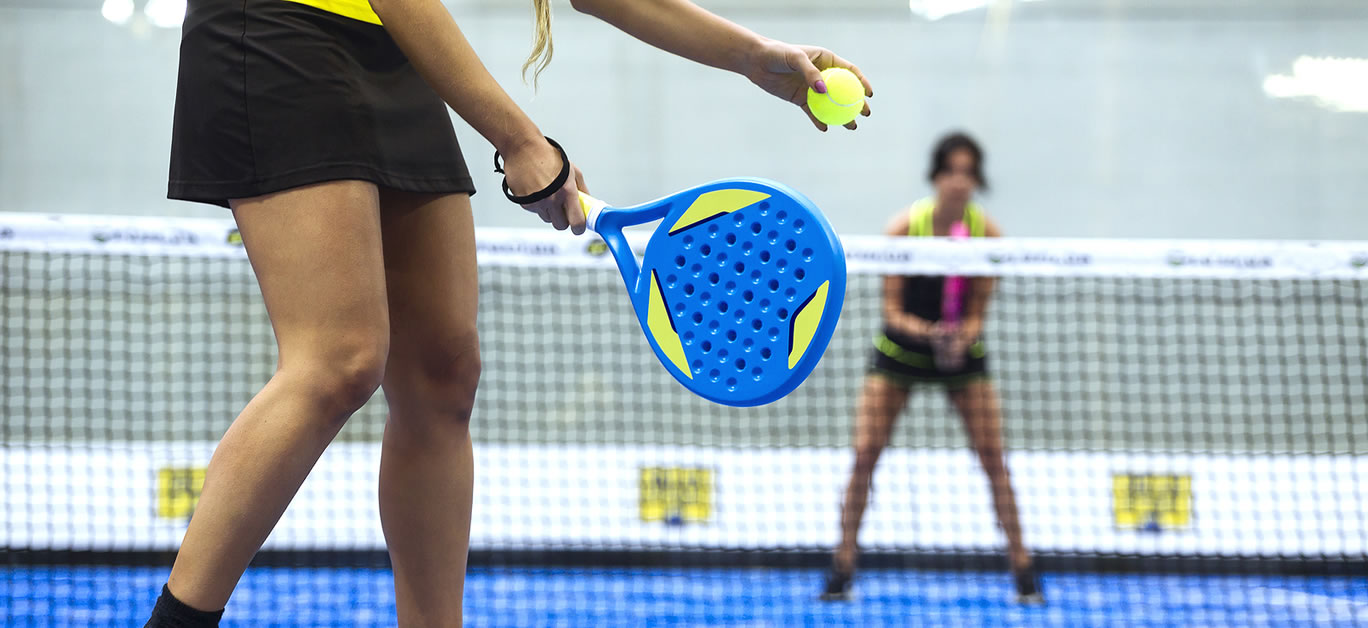
Walk into any padel club in Barcelona, Stockholm, or Milan on a weekday evening, and you’ll witness something unusual for a racket sport: laughter. Genuine, unguarded laughter between people who met twenty minutes ago.
This is the paradox that has propelled padel from Spanish beach clubs to over 50,000 courts across Europe. A sport demanding enough to leave you breathless, yet forgiving enough that complete beginners rally comfortably within their first session.
Цифри розповідають переконливу історію. Понад 35 мільйонів людей у всьому світі грають у падель, причому на Європу припадає приблизно 60% цієї участі. Але статистика не враховує те, що справді відрізняє падель: він був створений майже випадково, щоб об’єднати людей.
Built for Connection
When Mexican businessman Enrique Corcuera built the first padel court at his Acapulco home in 1969, he was solving a practical problem — his property lacked space for a full tennis court. The solution he improvised — a smaller enclosed court with walls in play — created something far more significant than a space-saving alternative.
The compact 20×10 metre court keeps all four players close enough for conversation. The underarm serve removes the intimidation factor that keeps many away from tennis. The glass walls transform errors into extended rallies rather than point-ending mishaps.
These design elements compound into an experience that feels fundamentally social. You’re not isolated across a vast court from your opponents — you’re sharing a glass-walled room with three other people, reacting to the same unpredictable bounces, celebrating the same improbable saves.
The Fitness Equation That Actually Works
Padel’s rise intersects with a broader shift in how people approach exercise. The punishing solo workouts of the 2010s have given way to something more sustainable: movement that doesn’t feel like punishment.
A typical padel match burns between 400 and 600 calories — comparable to high-intensity interval training. But the effort distributes differently. Short explosive movements replace the grinding baseline rallies of tennis. The smaller court means less sprinting, more rapid positioning. Your joints notice the difference.
The sport engages legs, core, and upper body through natural movement patterns rather than repetitive mechanical exercises. More importantly, you’re so focused on the ball ricocheting off the back wall that you forget you’re exercising at all.
This combination — genuine physical challenge disguised as play — explains why 92% of first-time players return for a second session. Few fitness activities can claim that retention rate.
The Gear Factor
Like any racket sport, equipment shapes the experience. But padel’s accessibility extends to its gear requirements.
Padel rackets — solid-faced without strings — cost less than quality tennis rackets and require no restringing. The depressurised balls are forgiving on the arm. Good court shoes matter more than expensive rackets, particularly for the lateral movements the sport demands.
For those exploring what equipment actually makes a difference, resources like the gear guides at Padel Sensation offer practical breakdowns without the marketing noise. Understanding the basics — racket weight, balance point, core material — prevents the common mistake of overspending on features that matter only to advanced players.
The democratising effect is real. A complete padel setup costs roughly half what comparable tennis equipment runs, lowering another barrier that keeps people from starting.
Why Europe, Why Now
Spain’s embrace of padel provides the template. The sport now ranks second only to football in participation, with over 17,000 courts serving more than six million players. What began in Andalusian beach clubs spread to urban centres, then to public parks and apartment complexes.
The infrastructure economics accelerate adoption. A padel court costs significantly less to build than a tennis court, requires less space, and generates more revenue per square metre — four players paying instead of two. Municipalities across France, Italy, and the UK have responded accordingly.
Celebrity visibility has amplified awareness without creating the exclusivity that often accompanies such endorsements. When Zlatan Ibrahimović, Rafael Nadal, and David Beckham play padel publicly, they’re participating in the same accessible version of the sport available at local clubs.
The UK exemplifies the growth trajectory. From fewer than 70 courts in 2019, the country now hosts over 1,000 courts across 325 venues. More than 400,000 Britons played in 2024 — triple the previous year’s figure.
The Deeper Current
Beneath the statistics and infrastructure expansion lies something harder to quantify. Padel arrives at a moment when many people actively seek alternatives to isolated, screen-mediated existence.
The sport offers structured social interaction without the awkwardness of purely social gatherings. You have something to do together, something that creates natural conversation openers and shared experiences. The post-match drink at the club bar isn’t an add-on — it’s part of the ritual.
Corporate wellness programs have noticed. The doubles format accommodates teams naturally. The skill gap between beginners and intermediates remains small enough that mixed-level games stay enjoyable for everyone. No one dominates the way a strong tennis player would.
For many players, the fitness benefits become almost secondary. They came for the exercise and stayed for the community.
Starting Isn’t the Hard Part
The genuine challenge with padel isn’t learning the basics — most people rally competently within thirty minutes. It’s finding court time.
Demand consistently outpaces supply in growing markets. Booking a week ahead becomes normal; booking the same day often requires luck. This scarcity, while frustrating, signals something important about the sport’s staying power.
What padel offers — meaningful physical activity, genuine social connection, and accessible skill progression — addresses needs that aren’t disappearing. The courts being built today will likely stay busy for decades.
Whether you approach padel as a fitness solution, a social outlet, or simply a new skill to develop, the entry point remains remarkably low. Four people, two rackets, and an hour.
The laughter comes naturally.